Digital Literacy, Education, and AI
Over the past few weeks, I’ve been exploring how generative AI acts as a tool and resource by reflecting on its impact on my daily life, my future as a student, and the broader educational landscape. This reflection has pushed me to look beyond simple automation and gain a deeper understanding of how Large Language Models (LLMs) work, while also considering how this technology may reshape my academic and professional life.
Insights and Resources
In Dr. Mariel Miller’s presentation, she explained the concept of generative AI as a collaborator that can dynamically engage with human processes, distinguishing it from traditional task-specific or rule-based AI. This perspective resonated with my own experience, as I’ve been learning to use these tools to support my scheduling, create study guides and practice problems, and develop more effective study habits. At the same time, as LLMs become more embedded in daily routines, it is important to critically examine how they are reshaping digital literacy and influencing educational practices.
Two key takeaways from the presentation were the use of AI as a “first source” in the learning process and concerns around data security and privacy. With the convenience and accessibility of popular models such as ChatGPT and Microsoft Copilot, there is growing concern that students may rely too heavily on these tools, potentially limiting the development of creativity and critical thinking skills. Additionally, many AI services rely on user data, including personal and sometimes private information, to improve their models. This raises ethical and legal concerns that have resurfaced in recent years and remain highly relevant as society continues to transition toward more automated services.
Speculative Futures and Learning
To deepen my understanding of AI’s role in education, I read some excerpts from the “Speculative Futures on ChatGPT and Generative Artificial Intelligence” article, which explores both optimistic and concerning possibilities on AI use in the future.While some of the scenarios felt hyperbolic, they were still reflective of potential outcomes in a highly automated world, similar to themes seen in Black Mirror. One that stood out to me was “The academic borg have arrived” (pg 118), which I connected closely to Dr. Miller’s perspective on cognitive offloading. This scenario describes a learning environment where heavy reliance on AI leads to diminished originality and innovation due to reduced human interaction among students and faculty.
Who has Access to our Data?
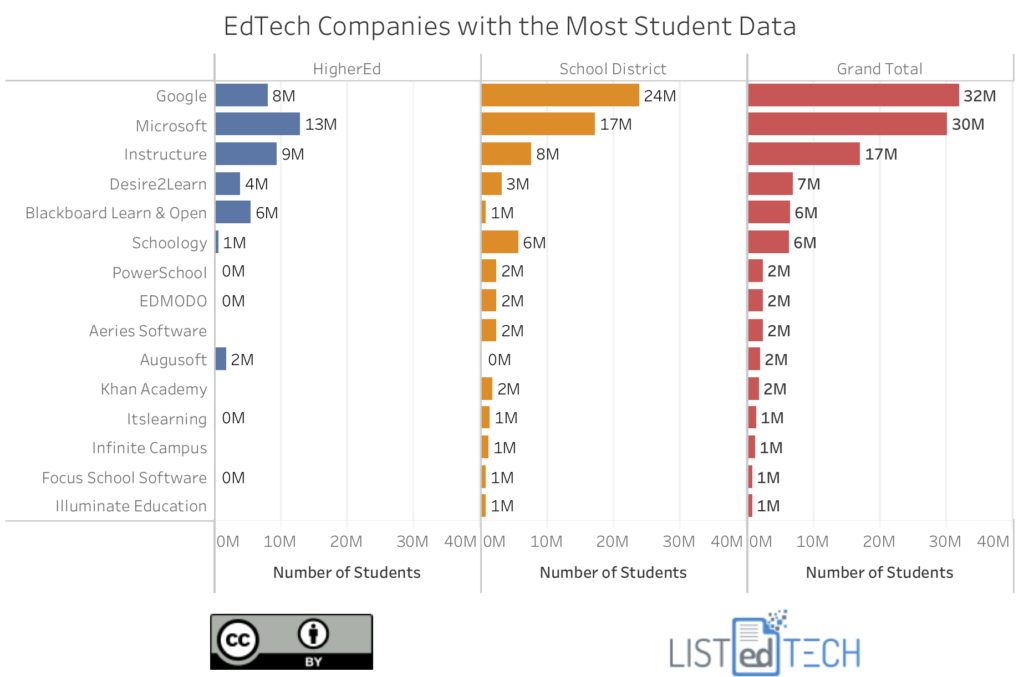
As more students integrate these tools into their academic routines, concerns around data ownership and privacy become increasingly important. An article by ListedTech‘s Justin Ménard (2019) notes that companies like Google and Microsoft already hold vast amounts of student data. In the push to become AI-ready, it is easy to overlook how our learning habits, writing styles, and logic patterns are becoming assets to large technology companies. As academic work becomes more closely tied to LLMs, the amount of personalized data shared continues to grow, far beyond the levels reported just six years ago. This reinforces that digital literacy today extends beyond knowing how to prompt AI systems to understanding where personal data goes and how it is used.
Staying Current with AI
To keep myself updated on how this landscape is shifting, I rely on a few essential sources, as well as discovered some new ones, to educate myself on developments and trends in the industry.
- The Batch (DeepLearning.AI): Curated by Andrew Ng, this provides a high-level yet technical breakdown of AI advancements that are relevant to engineers.
- MIT Technology Review – AI Section: Excellent for understanding the societal and ethical implications of new models before they hit the mainstream public.
- OpenAI News: Highlights the growth and expansion of OpenAI as a company as well as their updates on their services and models, such as ChatGPT.
Being a computer science student over the last four years, I have seen the change in growth of AI usage in not only my personal life but in my education as well. As classrooms increasingly treat AI as a learning partner, I remain interested in how these tools will continue to evolve and understand how human judgment and technology can work together moving forward.